Foto: COP30 – forética
COP30 reminded the world that climate action is not only about targets, but about the governance and transparency required to deliver them.
Climate ambition without integrity
“The exponential growth in climate finance is outpacing the development and enforcement of integrity controls, creating new and emerging corruption risks”.
“Without robust governance and integrity controls, the likelihood of a just transition to net zero is jeopardised”.
– U4 Anti-Corruption Resource Centre
COP30 in Belém, Brazil, brought this tension into sharp focus.
Ten years after the adoption of the Paris Agreement, the global climate agenda is no longer defined by a lack of commitments. Instead, it is increasingly shaped by a growing gap between ambition and implementation, and by the integrity risks that tend to emerge when that gap widens.
Why this matters
Climate finance is growing fast
Governance systems are under pressure
Informal practices thrive where implementation is rushed
COP30 at the edge of the Amazon
A few months have passed since the final decisions were made at the United Nations climate conference, COP30. As a new year begins, attention is shifting from negotiation rooms to the realities of implementation.
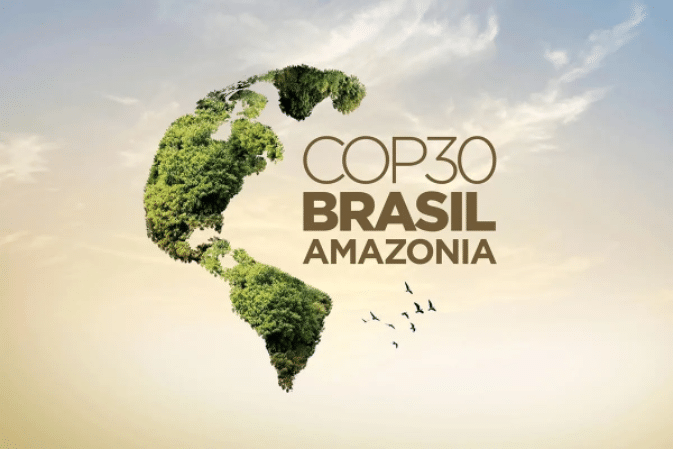
COP30 was held in Belém, Brazil, from 10–21 November 2025. The Conference of the Parties (COP) is the annual meeting under the UN Framework Convention on Climate Change (UNFCCC), where states review progress and agree on future climate measures. Belém, located at the edge of the Amazon River, is a gateway to the Amazon rainforest, a region central to global climate regulation and forest governance.
Hosting COP30 in this setting placed forests, land use and local governance realities physically close to global climate negotiations.
Yet proximity alone does not resolve the political, institutional and administrative challenges that shape how climate commitments are delivered.
Brazil continues to face persistent governance weaknesses, including corruption risks, administrative bottlenecks and informal payment practices such as facilitation payments.
This creates a structural tension: can high-integrity climate action be delivered in environments where governance risks remain systemic?
What came out of COP30
COP30 delivered progress, but it also exposed clear limitations.
Many countries submitted new or updated Nationally Determined Contributions (NDCs). Collectively, these improve the global emissions outlook compared to earlier trajectories, yet they still fall short of what climate science considers necessary.
Climate adaptation received greater political attention, with calls to increase adaptation finance and to develop indicators that show whether efforts genuinely strengthen resilience and protect vulnerable communities.
At the same time, some of the most politically sensitive issues, including the transition away from fossil fuels, advanced primarily through political declarations and partnerships outside the formal negotiation texts.
Initiatives on forests, gender equality, carbon markets and the establishment of a Just Transition Mechanism, reflect a growing recognition that climate action is not only technical, but both social and institutional. COP30 demonstrated continued commitment to multilateral climate cooperation, while underlining how difficult it remains to translate shared ambition into consistent, concrete action.
From global commitments to domestic implementation
The renewed focus on forests at COP30 highlights a recurring challenge in climate governance: the gap between international commitments and domestic implementation.
In the European Union, the EU Deforestation Regulation (EUDR) was designed to prevent deforestation-linked products from entering the EU market. However, in December 2025 the European Parliament approved a one-year delay to the regulation, alongside significant simplifications to documentation and due diligence requirements.
When rules are delayed, revised or inconsistently communicated, administrative discretion increases. This creates uncertainty for companies and authorities as well, and it is precisely in such environments that informal practices, including facilitation payments, are more likely to emerge.
Facilitation payments as a governance risk in the COP30 context
“The global scale, high value, and urgent nature of projects addressing the climate change crisis render … risks of corruption and governance failures particularly acute.”
(World Bank Integrity in Climate Finance & Action Symposium Report, 2025)
COP30 in Belém highlighted how climate ambition increasingly depends on the quality of governance systems on the ground. Climate commitments, forest protection measures and climate finance all rely on routine administrative processes such as permitting, licensing, inspections and access to public funding.
In Brazil, as in many countries implementing complex climate and forest governance reforms, these processes operate in a context where corruption risks are well documented, including administrative bottlenecks and informal payment practices such as facilitation payments.
These challenges are not unique to Brazil. However, the scale of climate ambition, the centrality of forests to global climate outcomes, and the volume of climate finance expected to flow through domestic systems make governance and integrity risks particularly visible and consequential in this context.
As political attention, funding flows and implementation pressure increase, administrative systems are expected to deliver faster and at greater scale. Where timelines are compressed and institutional capacity uneven, the risk of informal practices rises. Facilitation payments emerge not because of climate policy itself, but as responses to bottlenecks and uncertainty in implementation.
Such practices are not marginal. They distort decision-making, undermine transparency and weaken trust, ultimately putting climate outcomes at risk. Addressing facilitation payments is therefore an essential condition for ensuring that climate commitments are implemented lawfully, fairly and effectively.
Why addressing facilitation payments is essential for climate action
Addressing facilitation payments is not a side issue or a compliance detail. It is a practical requirement for implementing climate policies in high-risk governance environments.
These risks cannot be managed by individual organisations acting alone. Effective responses require coordination, shared approaches and collective learning across sectors and jurisdictions.
Fight Against Facilitation Payments Initiative (FAFPI) provides a platform for organisations to work together on practical solutions, exchange experience and strengthen integrity in climate-related activities. Organisations engaged in climate policy, finance or implementation are encouraged to explore how participation can support their own efforts and contribute to more effective and credible climate action.
Further information and opportunities to engage is available on FAFPI’s website: https://fafpi.org/ and on our LinkedIn: https://www.linkedin.com/company/fafpi
Sources and further reading
UNFCCC – Conferences of the Parties (COPs)
https://unfccc.int/process/bodies/supreme-bodies/conference-of-the-parties-cop
UNFCCC – COP30 (Belém, Brazil)
https://unfccc.int/cop30
UNFCCC – The Paris Agreement (2015)
https://unfccc.int/process-and-meetings/the-paris-agreement/the-paris-agreement
UNFCCC – Nationally Determined Contributions (NDCs)
https://unfccc.int/process-and-meetings/the-paris-agreement/nationally-determined-contributions-ndcs
UNFCCC – Global Stocktake
https://unfccc.int/topics/global-stocktake
World Bank – Integrity in Climate Finance & Action
https://www.worldbank.org/en/topic/governance/brief/integrity-in-climate-finance-and-action
OECD – Climate Change and Corruption Risks
https://www.oecd.org/gov/ethics/climate-change-corruption-risks.htm
Transparency International – Climate Change and Corruption
https://www.transparency.org/en/projects/climate-governance-integrity-programme/climate-corruption-atlas
Corruption risk forecast – Brazil
https://www.corruptionrisk.org/country/?country=BRA
DLA Piper – Global bribery offenses guide
https://www.dlapiper.com/en/insights/publications/2019/09/global-bribery-offenses-guide/brazil
FAFPI – Brazil: Corruption, Bribery and Facilitation Payments
https://fafpi.org/brazil-corruption-bribery-and-facilitation-payments/
European Commission – EU Deforestation Regulation (EUDR)
https://environment.ec.europa.eu/topics/forests/deforestation/regulation-deforestation-free-products_en
EU deforestation law: Parliament supports simplification measures
https://www.europarl.europa.eu/news/en/press-room/20251120IPR31498/eu-deforestation-law-parliament-supports-simplification-measures